ABOUT US
Focusing on the design, research and development, production, sales, and service of cross-border industrial fans and fresh air systems. And has obtained relevant safety and environmental certifications such as Ce, Rohs, and Fcc. There are two production and manufacturing bases in Zhongshan and Dongguan, with a total area of 20000 square meters. We have a professional R&D team (including 30 engineers) and a strict quality management system. Its products are exported to domestic and international markets and highly recognized by the market.

FOUNDING TEAM
Each page of our story has been written by the hands of the people behind our doors – from our research and development teams to our robust sales and support teams. When the ink dries, their passion and talent is what truly has left the biggest mark. And it’s what continues to write our story.

Jenny Wilson
Chief Executive Officer

Aiden
Chief Executive Officer
Market Research & Feasibility Study
1.Target User Analysis: Define the core user group’s age, occupation, usage scenarios, and unmet pain points; collect first-hand data through questionnaire surveys and focus group interviews.
2.Competitor Deep Dive: Systematically research the functions, pricing, design highlights, user reviews, and market share of similar products in the market to extract the differentiated competitive advantages of the product.
3.Needs Validation & Prioritization: Categorize and sort collected user needs, validate the authenticity and urgency of needs through small-scale interviews, and prioritize core rigid demands.
4.Feasibility Assessment: Evaluate the technical feasibility and commercial feasibility of product launch based on R&D capabilities, supply chain resources, cost budgets, and industry compliance requirements.

Sketching & Digital Modeling
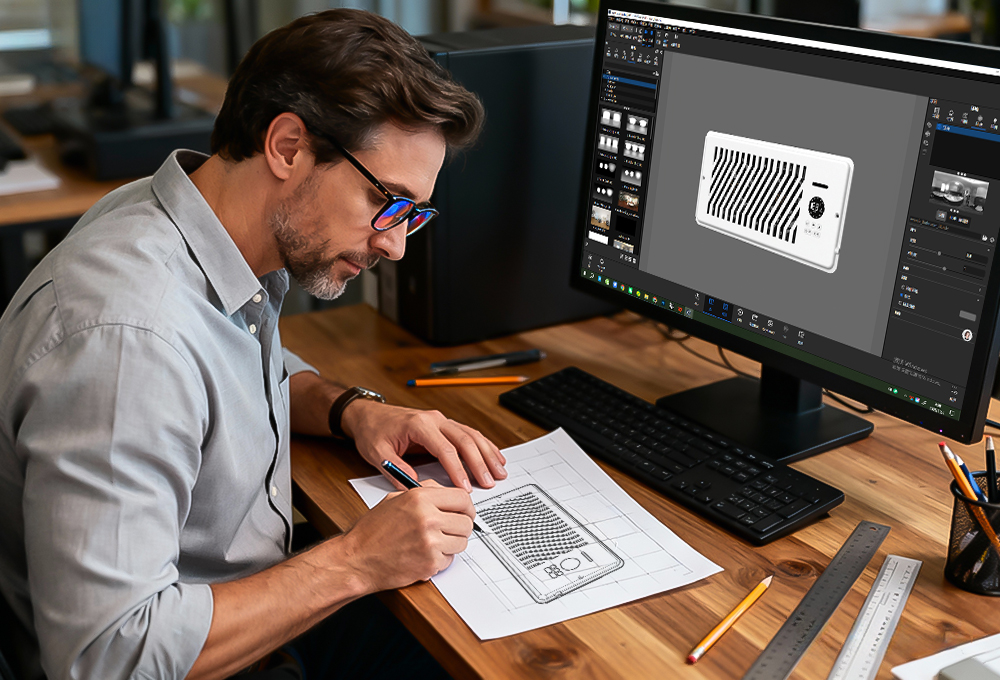
1.Concept Sketching: Based on research results, draw multiple versions of conceptual sketches for product appearance and functional layout, focusing on core functions and form; select 3-5 promising schemes through internal reviews.
2.Detailed Sketch Refinement: Refine details such as product dimensions, button layout, and interface positions; optimize operational convenience and grip comfort in line with ergonomic principles.
3.2D Engineering Drawing: Convert refined sketches into standardized 2D engineering drawings, clearly marking dimensional tolerances, material requirements, and process specifications to provide a basis for 3D modeling.
4.3D Digital Modeling: Use CAD software (e.g., SolidWorks, AutoCAD) to build full-scale 3D models, realizing integrated design of appearance and internal structure; verify component compatibility through virtual assembly and correct interference issues.
3D Prototyping, Validation & Mold Tooling
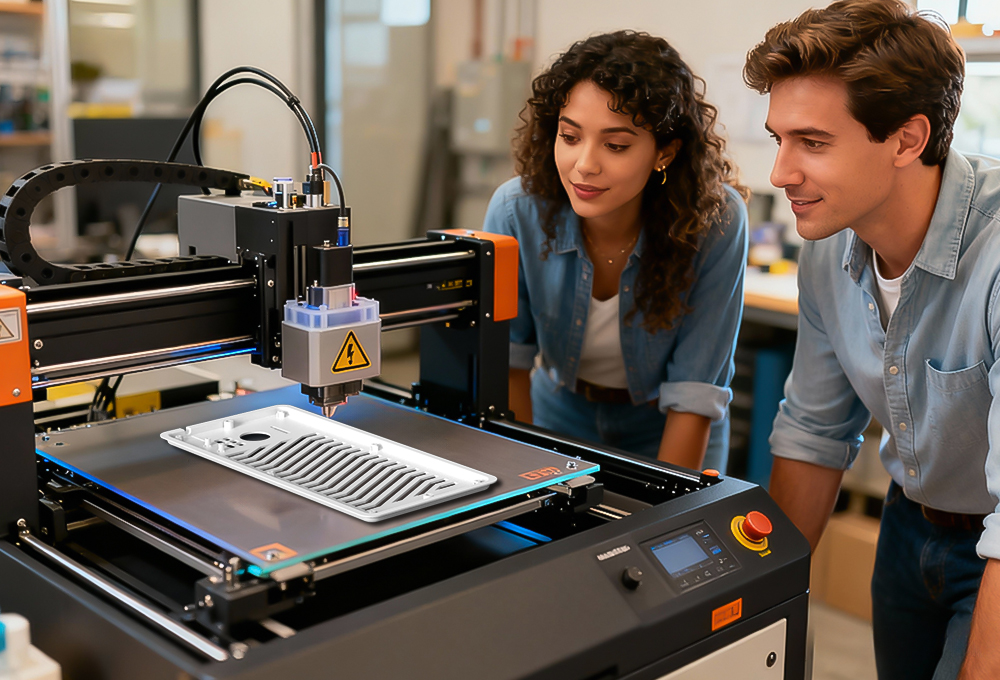
1.Rapid Prototyping: Based on the 3D model, produce 1:1 physical samples using SLA/FDM 3D printing or CNC machining to replicate product appearance and core functions.
2.Multi-dimensional Prototype Validation: Functionality Testing: Verify if core functions meet design requirements; Performance Testing: Test key indicators such as durability, water resistance, and stability; User Trials: Invite target users to conduct actual tests, collect improvement suggestions, and form a test report.
3.Final Design Freeze: Optimize the 3D model based on validation results and lock in technical parameters and design schemes.
4.Mold Design & Fabrication: Entrust professional manufacturers to design molds according to final drawings, specifying parameters such as cavity structure and gate location; process molds using high-quality mold steel (e.g., S136, H13).
5.Mold Trial & Acceptance: Conduct mold trial production, inspect product dimensional accuracy, appearance quality, and assembly effect; complete mold acceptance after correcting deviations and enter the mass production preparation phase.